
No products in the cart.
Return To Shop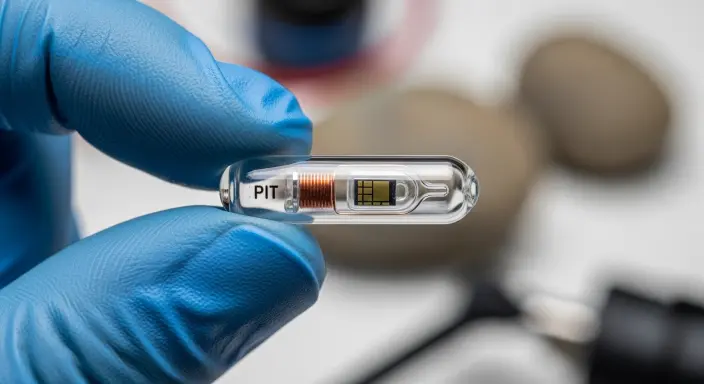
How PIT Tag Technology Is Transforming Aquaculture Genetics and Breeding Programs
Aquaculture is evolving rapidly. As global demand for seafood increases, producers and researchers is under pressure to improve efficiency, stock quality, and long-term sustainability. One of the most powerful tools supporting this shift is individual fish identification using PIT tag technology.
Passive Integrated Transponder tags allow each fish to carry a permanent digital identity. This identity becomes the backbone for collecting accurate data related to genetics, sex determination, growth, and survival. When implemented correctly, PIT tagging enables smarter breeding decisions and more predictable production outcomes.
Why Individual Fish Identification Matters in Aquaculture
Traditional aquaculture data collection often relies on group averages. While useful, averages hide variability that is critical for selective breeding and performance optimization. Individual identification changes that entirely.
With PIT tags, producers and researchers can track each fish across its entire life cycle. This creates a direct link between genetic origin and real-world performance.
Key benefits include the ability to associate growth rates with specific genetic lines, track survival across families, and evaluate broodstock performance with confidence.
Supporting Genetic Selection and Breeding Programs
Genetic improvement depends on accurate data. PIT tags provide a reliable way to link genetic sampling to individual animals.
Once a fish is PIT tagged, its unique identifier can be associated with genetic test results such as parentage assignment, genomic selection scores, or family line classification. This allows aquaculture operations to compare performance across genetic lines with precision.
Benefits for genetic programs include:
- Improved selection accuracy for broodstock
- Faster genetic gain across generations
- Reduced reliance on external tagging or fin clipping
- Cleaner datasets for long term breeding analysis
By maintaining individual level records, breeding decisions become data driven rather than assumption based.
Enabling Reliable Sex Determination Tracking
Sex determination is a critical factor in many aquaculture species. In some programs, one sex grows faster, matures later, or produces better product quality.
PIT tags make it possible to permanently link sex determination results to individual fish. Whether sex is identified through visual inspection, ultrasound, biopsy, or genetic testing, the result can be stored alongside the fish’s PIT tag ID.
This enables:
- Accurate tracking of sex ratios within families
- Evaluation of sex specific growth and survival
- Targeted broodstock selection
- Improved stock management decisions
Without individual identification, sex data is often lost or disconnected from performance metrics. PIT tagging ensures that data remains usable throughout the life of the fish.
Long Term Growth and Performance Monitoring
Growth is one of the most important indicators of success. PIT tags allow repeated measurements of the same individual over time without stress inducing re-tagging.
By scanning a PIT tag during routine handling, producers can instantly retrieve a fish history including previous measurements, genetic background, and health observations.
This supports:
- Longitudinal growth analysis
- Early identification of top performing individuals
- Detection of underperforming genetic lines
- Improved feed conversion and stock efficiency
Over time, this data becomes invaluable for refining feeding strategies and breeding objectives.
Improving Data Quality and Research Outcomes
One of the most overlooked advantages of PIT tag systems is data integrity. Manual labeling, visual marks, and temporary tags are prone to error, loss, and misidentification.
PIT tags eliminate ambiguity. Each scan returns a single unique ID with no duplication. When integrated with data collection software, this reduces transcription errors and improves confidence in research findings.
For academic and applied research, this means stronger datasets, more reliable conclusions, and improved reproducibility.
Practical Considerations for PIT Tagging in Aquaculture
Modern PIT tagging systems are designed to be fast, safe, and minimally invasive. Proper needle size selection, correct tagging location, and trained staff are essential for best outcomes.
In aquaculture environments, tagging is commonly performed during routine handling or grading events to minimize additional stress.
When paired with high quality tagging guns and preloaded PIT tags, the process becomes efficient even at scale.
Why PIT Tagging Is a Competitive Advantage
As aquaculture becomes more data driven, operations that invest in individual tracking gain a measurable advantage. Better data leads to better decisions. Better decisions lead to improved yields, healthier fish, and more predictable outcomes.
PIT tag technology supports:
- Sustainable production practices
- Transparent breeding programs
- Stronger collaboration with researchers and regulators
- Long term operational efficiency
The Future of Aquaculture Is Individual Data
The future of aquaculture depends on understanding fish as individuals, not just biomass. PIT tag systems make that possible.
From genetics and sex determination to growth monitoring and broodstock evaluation, individual identification is now a foundational tool for modern aquaculture.
As breeding programs grow more sophisticated, the value of clean, reliable, individual level data will only increase.


Related posts

Traditional PIT tags have transformed fisheries and wildlife research by allowing scientists to uniquely identify individuals over long periods of time. But tag size has... Continue reading
Budgets Tight? Stretch Your Research Dollars with Voda IQ If you work in fisheries, conservation, aquaculture, or hatchery management, you already know the reality. Budgets... Continue reading

From Field Prep to Meaningful Data Behind every PIT tag dataset is a full day of preparation, coordinated fieldwork, and a series of small but... Continue reading
Choosing the Right Location for Accurate Data and Healthy Fish Passive Integrated Transponder (PIT) tags have become a standard tool in fisheries research, aquaculture and... Continue reading
Passive Integrated Transponder tags, better known as PIT tags, have become one of the most important tools in fisheries biology, wildlife monitoring, and laboratory research.... Continue reading
Add comment