
No products in the cart.
Return To Shop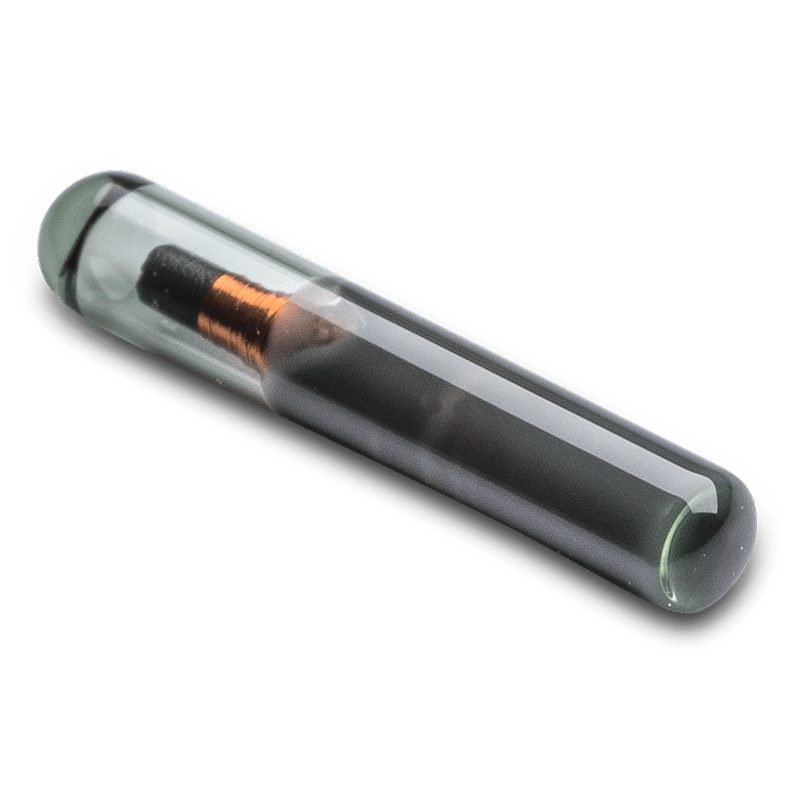
PIT Tags vs. Other Animal Tagging Technologies: Acoustic, GPS, Visible Tags, Etc.
Suppose you’re reviewing field data and suddenly realize that half of the movement information you expected is missing. Or the tag you used for a marine species worked beautifully last season, but failed when applied to a freshwater fish. These setbacks don’t just slow research; they reshape timelines, funding needs, and even management decisions.
Animal tracking has evolved dramatically, but not all tagging technologies serve the same purpose. PIT Tags, acoustic tags, GPS tags, and visible markers each play a different role depending on the species, environment, and type of data required. Comparing them side by side gives researchers a clearer understanding of how each tool truly works in practice, especially when studies span fish, marine mammals, birds, or terrestrial wildlife.
What Makes PIT Tags Unique in Fish Research
PIT Tags or passive integrated transponders are widely used in freshwater and hatchery fish studies. They contain no battery. Instead, a stationary antenna activates the tag when a fish passes nearby, transmitting a unique ID number.
What sets PIT Tags apart:
- They are extremely small and suitable even for juvenile fish.
- They last for the lifespan of the fish without requiring replacement.
- They offer highly accurate, individual identification.
- They work best in predictable migration corridors like ladders, channels, and weirs.
Since PIT Tags rely on close-range detection, they are ideal for studies involving repeated movement through fixed locations. This makes them invaluable for monitoring survival, migration timing, hatchery returns, and habitat use in rivers and streams.
Because PIT tags are foundational in fisheries science education, many universities and technical programs teach PIT tagging as a core skill. VodaIQ supports these programs by providing high-quality PIT tags compatible with existing FDX systems, along with guidance that helps students practice accurate, real-world tagging techniques.
However, PIT Tags are not used for long distance, open water tracking because they do not transmit signals on their own. This is where other technologies come in.
How Acoustic Tags Compare Across Species
Acoustic tags operate very differently from PIT Tags. Instead of requiring close proximity, acoustic tags emit sound pulses that underwater receivers detect from varying distances.
Where they are used:
- Large river systems
- Lakes and reservoirs
- Marine environments
- Studies involving sharks, sturgeon, salmon, marine mammals, and sometimes turtles
Strengths of acoustic tagging:
- Detection ranges can extend hundreds of meters underwater.
- They provide spatial movement data rather than simple point detections.
- They support real-time monitoring when receivers are networked.
Because acoustic tags contain batteries, they are larger than PIT Tags and eventually expire. Their size limits use in very small fish, but they work well for medium to large aquatic animals.
GPS Tags: Ideal for Birds, Mammals, and Surface Breathers
GPS tags operate using satellite signals. Since GPS signals cannot penetrate water, these tags are not used for traditional fish tracking. But they play a major role in wildlife research involving birds, terrestrial mammals, sea turtles and marine mammals that surface for air.
Where GPS tags excel:
- High-resolution movement paths
- Long-distance migration tracking
- Remote transmission of stored location data
Compared with PIT Tags, GPS tags are designed for macro-scale movement patterns rather than individual life history data. They are larger, require batteries, and can be mounted externally or harnessed depending on the species.
Visible Tags Across Land and Water Species
Visible tags are some of the oldest identification tools in wildlife research. These tags include fin clips, color bands, wing bands, ear tags, and external markers.
They are widely used for:
- Fish in mark-recapture studies
- Birds in population monitoring
- Mammals for herd or colony identification
- Amphibians and reptiles in visual surveys
Advantages:
- Easy visual identification
- Low cost
- Useful for short-term or broad population studies
However, visible tags can fade, detach, or create irritation. They rely entirely on recapture or visual observation, which limits data collection. When compared with PIT Tags, visible tags provide far less accuracy and long-term reliability, especially for fish.
Comparing PIT Tags with Other Technologies: The Big Picture
When comparing PIT Tags to acoustic, GPS, and visible tagging methods, the differences are clear:
- PIT Tags are unmatched for long-term individual identification in fish, especially where detection points are fixed.
- Acoustic tags are better for tracking movements across wide aquatic areas or in systems without predictable passage routes.
- GPS tags serve entirely different species and environments, focusing on long-range, satellite-based movement patterns.
- Visible tags provide simple identification but limited data and reliability.
Each technology answers different ecological questions. PIT Tags shine in fish passage, survival, growth, and hatchery return studies. Acoustic tags excel in the spatial tracking of aquatic species. GPS tags capture broad movement patterns in land and air species. Visible tags support population-level field studies where electronic technology isn’t needed.
Advance Your Research Precision with VodaIQ
Whether your work focuses on fish passage, behavioral studies, or long-term monitoring, having the right tagging tools makes every project smoother, clearer, and more reliable. At VodaIQ, we support researchers with durable, high-performance PIT Tags designed specifically for aquatic studies that require accuracy and longevity.
For educators and research institutions, VodaIQ also offers educational discounts for teaching labs, student projects, and faculty-led training programs, helping programs stay cost-effective while giving students hands-on experience with professional-grade equipment. If you are ready to power your data with tools built for scientific impact, VodaIQ is here to help you move forward with confidence.

Related posts
If you’ve ever participated in wildlife research, you know the uneasy moment when you ask yourself, Are we gathering knowledge at the cost of the... Continue reading
Recently, our team at Voda IQ had the privilege of visiting Bracken Cave Preserve, just outside of San Antonio, Texas. Home to an estimated 15–20... Continue reading
Introduction: The integration of technology has revolutionized the field of fisheries biology, enabling researchers to conduct more precise and less invasive studies. This blog post... Continue reading
Tagging fish is a vital procedure in fisheries research, enabling scientists to track movements, growth, and population dynamics. One common method involves using Passive Integrated... Continue reading
Monitoring fish populations is a critical part of fisheries management and conservation, and one of the most advanced tools in this effort is the Passive... Continue reading
Add comment