
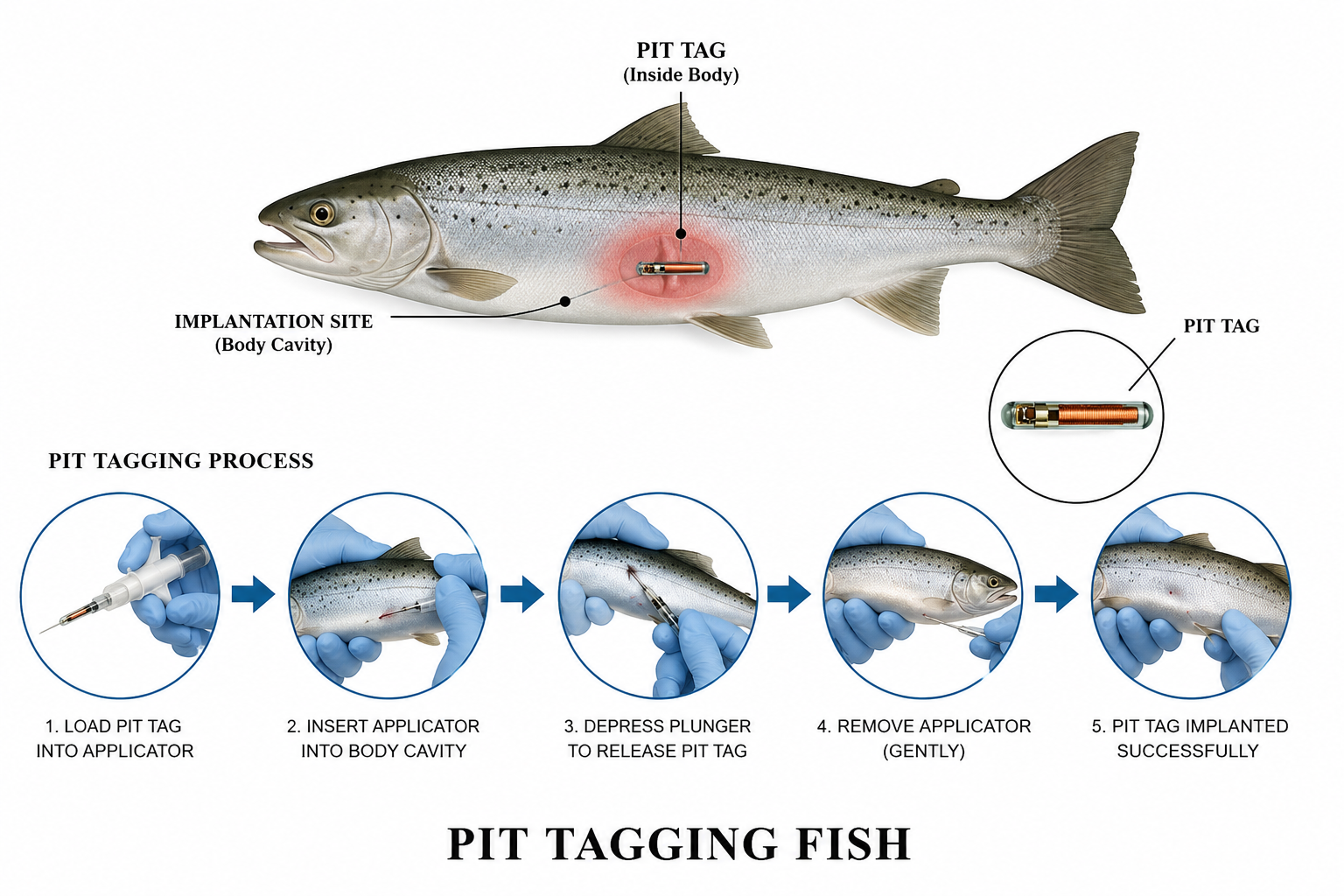
5 Common PIT Tagging Mistakes and How to Avoid Them
Passive Integrated Transponder (PIT) tags have become one of the most trusted tools in fisheries research, hatchery management, aquaculture, and wildlife conservation. When used correctly, PIT tags provide reliable long term identification data that helps researchers monitor movement, survival, growth, and behavior.
However, even the best PIT tag technology can produce poor results if tagging procedures are inconsistent or improper.
At Voda IQ, we work with fisheries professionals around the world and have seen firsthand how small mistakes during PIT tagging can lead to reduced fish health, poor tag retention, inaccurate data, and lower detection success.
Here are five of the most common PIT tagging mistakes and how fisheries biologists and hatchery crews can avoid them.
1. Using the Wrong PIT Tag Size
One of the biggest mistakes in fisheries tagging programs is selecting the wrong PIT tag size for the species or life stage being studied.
Many researchers want maximum read range, which generally improves with larger PIT tags. However, using a tag that is too large for the fish can negatively impact fish health, swimming performance, recovery, and survival.
On the other hand, selecting a tag that is too small may reduce read distance and detection performance.
Best Practice:
Choose the largest PIT tag that is appropriate for the fish size and study objectives.
Common examples include:
• 8 mm PIT Tags for smaller juvenile fish
• 9 mm PIT Tags for intermediate applications
• 12 mm PIT Tags for many salmonid studies
• 23 mm PIT Tags for larger species and extended read range applications
At Voda IQ, our team regularly helps fisheries researchers determine the best PIT tag option for their specific study.
2. Reusing Needles Too Long
Needle sharpness matters more than many people realize.
Over time, repeated use dulls needles and can increase tissue trauma during implantation. This may lead to:
• Increased handling stress
• Delayed recovery
• Infection risk
• Lower tag retention
• Higher mortality rates
In high volume tagging operations, dull needles can also slow crews down significantly.
Best Practice:
Use sharp sterile needles consistently throughout the tagging process.
Many fisheries and aquaculture operations are now moving toward preloaded PIT tag systems that provide:
• A fresh sharp needle every application
• Faster tagging workflows
• Improved fish health outcomes
• Better consistency between taggers
The EcoSaver Preloaded PIT Tag System from Voda IQ was specifically designed to help improve efficiency while minimizing handling stress and tissue damage.
3. Improper Tag Placement
Incorrect PIT tag placement can reduce detection rates and increase the chance of tag loss.
Improper implantation depth or positioning may cause:
• Tag shedding
• Reduced read performance
• Internal injury
• Difficult long term monitoring
Tag placement procedures may vary by species and study design, but consistency is critical.
Best Practice:
Develop standardized tagging protocols and ensure all technicians receive proper training before large scale tagging begins.
Important considerations include:
• Implantation location
• Needle angle
• Insertion depth
• Fish handling procedures
• Post tagging recovery monitoring
Even small improvements in consistency can dramatically improve data quality.
4. Poor Data Collection and Record Keeping
A successful PIT tagging program is only as good as the data attached to the tag.
One of the most common problems in fisheries research is incomplete or inconsistent field data collection. Manual entry errors can quickly create issues that affect entire studies.
Common data problems include:
• Duplicate records
• Incorrect tag IDs
• Missing species information
• Length or weight entry errors
• Inconsistent date formatting
• Lost field sheets
Best Practice:
Use digital fisheries data collection tools whenever possible.
Modern fisheries software platforms like VodaTrak Software help researchers:
• Instantly capture PIT tag codes
• Record fish lengths automatically
• Integrate barcode scanners and scales
• Export directly into Excel
• Reduce transcription errors
• Store data securely
Pairing digital software with tools like the Veloce Measuring Board can significantly improve field efficiency and data accuracy.
5. Inadequate Crew Training
Even experienced fisheries crews benefit from standardized PIT tagging training.
Without proper instruction, tagging techniques can vary significantly between technicians. Inconsistency often leads to:
• Increased fish stress
• Variable tag retention
• Uneven data quality
• Slower processing times
Best Practice:
Provide hands on PIT tagging training before beginning large projects.
Training should include:
• Fish handling procedures
• Proper implantation technique
• Sterile equipment handling
• Data entry workflows
• Reader operation
• Quality control checks
At Voda IQ, we frequently provide customer support and training assistance to help ensure tagging programs operate efficiently and successfully.
Why Proper PIT Tagging Procedures Matter
PIT tagging plays a critical role in fisheries conservation, hatchery evaluations, migration monitoring, and aquatic research worldwide.
When tagging procedures are optimized, researchers benefit from:
• Higher tag retention
• Improved fish health
• Better detection performance
• More accurate data
• Faster field workflows
• Reduced long term project costs
Avoiding common PIT tagging mistakes helps ensure the integrity of fisheries research while supporting better outcomes for both researchers and the species being studied.
Modern PIT Tagging Is About More Than Just the Tag
Today’s most efficient fisheries programs integrate:
• High quality PIT tags
• Reliable RFID readers
• Digital data collection software
• Integrated measuring boards
• Barcode scanners and peripherals
• Data management software
These systems help fisheries professionals spend less time managing paperwork and more time focusing on conservation and research.
Learn More About PIT Tagging Solutions
To learn more about PIT tags, RFID readers, VodaTrak Software, EcoSaver Preloaded PIT Tags, or fisheries data collection solutions, visit:
Or contact the Voda IQ team to discuss the best PIT tagging setup for your fisheries, hatchery, or aquaculture project.



Add comment