
No products in the cart.
Return To Shop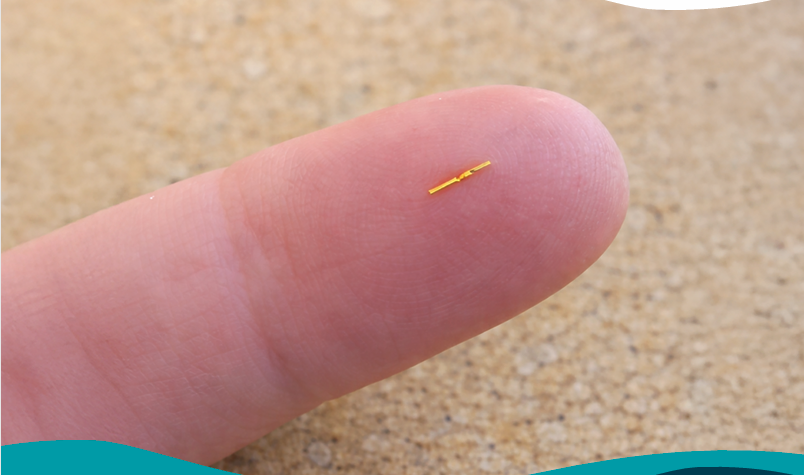
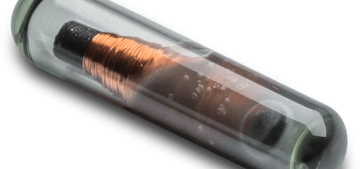
Worlds Tiniest PIT Tag Is Coming Smaller Than Ever Now
Traditional PIT tags have transformed fisheries and wildlife research by allowing scientists to uniquely identify individuals over long periods of time. But tag size has always been a limiting factor.
Smaller organisms often could not be tagged safely, ethically, or at all.
By shrinking PIT tag technology to this extreme scale, Voda IQ is opening the door to studying species that were previously off limits to individual electronic identification.
That means
• tracking smaller animals
• reducing implantation impact
• enabling higher welfare standards
• expanding study design possibilities
• gathering cleaner, more precise datasets
When tags get smaller, science gets bigger.
Designed With Zebrafish in Mind
One of the primary inspirations behind this new micro tag was zebrafish, a cornerstone species in biomedical and genetic research.
Zebrafish are used worldwide to study
• human disease models
• genetics and development
• toxicology
• regenerative biology
• pharmaceutical testing
Yet researchers often face a major challenge
how do you reliably identify individual fish within large schooling populations over time?
Current approaches rely heavily on visual marks, dyes, fin clips, or tank level tracking. These methods can fade, require repeated handling, or limit long term individual level data collection.
Ultra small PIT tags change that.
Being able to uniquely identify each animal electronically allows researchers to
• follow individuals throughout their life cycle
• connect genotype to phenotype
• track survival and growth
• monitor treatment effects
• reduce repeated handling
• improve data integrity
For schooling species like zebrafish, this is a potential game changer.
Understanding Read Distance at This Scale
With technology this small, physics comes into play.
Because of the extremely small antenna and coil required in a 4 mm x 0.5 mm PIT tag, read distance is naturally more limited than with larger tags. These micro tags are best suited for research designs where animals can be recaptured, netted, or handled for scanning rather than detected at long range by fixed antennas.
That makes them ideal for
• laboratory and hatchery environments
• controlled tanks or raceways
• mark recapture studies
• short range handheld scanning
• behavioral or treatment based experiments
In these settings, the benefits of individual electronic identification still far outweigh the constraints of shorter detection range.
Beyond Fish: New Frontiers for Tiny Tags
While zebrafish were central to the design, the applications extend far beyond aquatics.
This new micro PIT tag could support work with
• insects used in pollination, population dynamics, or disease vector research
• small amphibians and reptiles such as frogs, lizards, and juvenile snakes
• very small mammals where traditional tags have been impractical
• early life stages in aquatic species
For researchers studying cryptic species, micro habitats, or rapid life cycles, individual identification at this scale opens entirely new experimental designs.
Built With the Same Voda IQ Standards
Shrinking a PIT tag does not mean shrinking expectations.
Our newest micro tag is being developed with the same principles that guide every Voda IQ product
• read reliability
• manufacturing consistency
• rigorous quality control
• animal welfare first design
• real world usability
From field biologists to hatchery managers to laboratory researchers, our goal is always to deliver tools you can trust when the data matters most.
Coming This Fall
We are putting the final touches on testing and validation, and we cannot wait to share more details as we approach release.
If your research involves zebrafish, insects, herpetology, or other ultra small species, keep an eye out.
This fall, Voda IQ is going smaller than anyone has before.
And in doing so, helping science think bigger.

Related posts

At Voda IQ, advancing fisheries research and improving PIT tag technology remain at the center of what we do. Our participation in both the Montana... Continue reading
Budgets Tight? Stretch Your Research Dollars with Voda IQ If you work in fisheries, conservation, aquaculture, or hatchery management, you already know the reality. Budgets... Continue reading
Aquaculture is evolving rapidly. As global demand for seafood increases, producers and researchers is under pressure to improve efficiency, stock quality, and long-term sustainability. One of the most powerful... Continue reading
From Field Prep to Meaningful Data Behind every PIT tag dataset is a full day of preparation, coordinated fieldwork, and a series of small but... Continue reading
Choosing the Right Location for Accurate Data and Healthy Fish Passive Integrated Transponder (PIT) tags have become a standard tool in fisheries research, aquaculture and... Continue reading
Add comment