
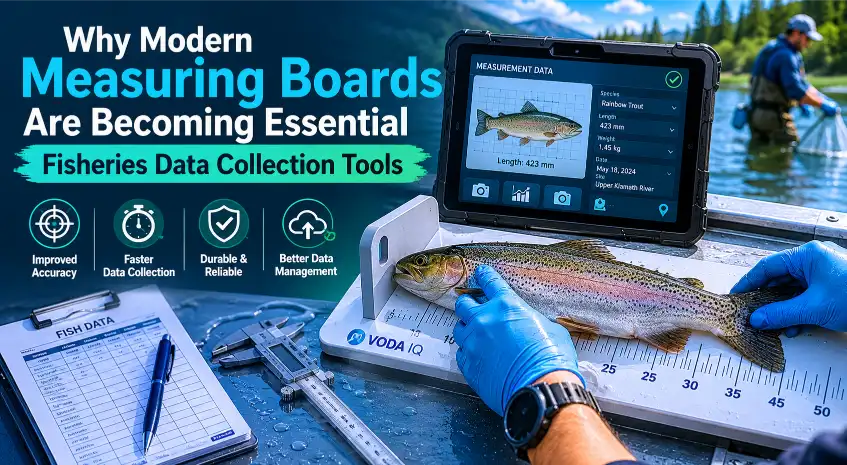
Why Modern Measuring Boards Are Becoming Essential Fisheries Data Collection Tools
For many years, measuring boards served one primary purpose in fisheries work: measuring fish length. While that function remains important, today’s fisheries professionals are demanding far more from their field equipment.
Modern fisheries operations require faster workflows, improved data accuracy, reduced fish handling time, and better integration between multiple technologies. As a result, measuring boards are evolving from simple measuring devices into fully integrated fisheries data collection platforms.
At Voda IQ, technologies like the Veloce Measuring Board and VodaTrak Software are helping fisheries biologists, hatcheries, and research teams streamline field operations while improving efficiency and fish health outcomes.
Traditional Measuring Boards Create Workflow Bottlenecks
Historically, fisheries sampling often involved several separate steps:
• Measure fish manually
• Read the measurement aloud
• Record the length on paper
• Scan PIT tags separately
• Enter data later into spreadsheets
While effective, these workflows can become slow and labor intensive, especially during:
• Hatchery operations
• Smolt tagging projects
• Screw trap monitoring
• Gill net surveys
• Population assessments
• Multi species sampling
Every additional manual step increases:
• Processing time
• Data entry errors
• Fish handling stress
• Labor requirements
Modern fisheries programs are now looking for ways to simplify these workflows.
Measuring Boards Should Do More Than Measure Fish
Today’s fisheries professionals increasingly expect measuring boards to function as integrated data collection tools rather than standalone measuring devices.
Modern systems now combine:
• Automated fish length measurement
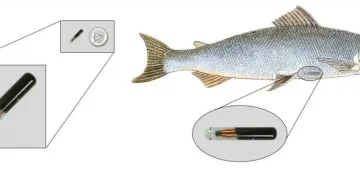
• PIT tag scanning
• RFID reader integration
• Fisheries data management software
• Barcode scanner support
• Scale integration
• Real time digital data recording
This allows fisheries crews to collect more accurate data faster while reducing paperwork and manual transcription.
The Benefits of Integrated Length Measurement and RFID Capture
One of the biggest improvements in fisheries workflows comes from integrating fish measurement directly with PIT tag data collection.
Instead of manually matching:
• Fish lengths
• PIT tag IDs
• Species information
• Weight data
modern systems can automatically link these records together instantly.
This creates major advantages for fisheries professionals.
Improved Data Accuracy
Automated data collection reduces:
• Handwriting errors
• Incorrect PIT tag entry
• Duplicate records
• Transcription mistakes
• Missing measurements
Accurate fisheries data is critical for:
• Survival studies
• Migration monitoring
• Hatchery evaluations
• Population analysis
• Long term conservation research
Faster Fish Processing Improves Fish Health
One of the most important advantages of integrated fisheries systems is reduced fish handling time.
The faster fish can be:
• Measured
• Tagged
• Identified
• Released
the lower the overall stress placed on the animal.
Modern integrated measuring boards help crews:
• Process fish faster
• Reduce repetitive tasks
• Eliminate manual recording steps
• Improve workflow organization
This can improve:
• Fish recovery
• Tag retention
• Sampling efficiency
• Overall study quality
The Veloce Measuring Board Was Designed for Modern Fisheries Workflows
The Veloce Measuring Board from Voda IQ was developed specifically to help fisheries professionals improve efficiency during field and hatchery operations.
When paired with VodaTrak Software, the Veloce Measuring Board allows fisheries crews to:
• Instantly record fish lengths
• Automatically integrate PIT tag data
• Export directly into Excel spreadsheets
• Reduce paperwork
• Improve organization
• Streamline field sampling workflows
Data fields within VodaTrak Software are fully customizable, allowing fisheries professionals to tailor data collection forms and workflows to meet the exact needs of their hatchery, research project, or field study.
The system is particularly valuable for:
• One person sampling crews
• High volume hatchery work
• Fisheries surveys
• Juvenile fish monitoring
• Remote field operations
2D Barcode Scanners Add Another Layer of Efficiency
Many fisheries projects involve sampling multiple fish species at the same time.
Manually typing or selecting species names repeatedly during sampling can slow operations and increase errors.
Integrated 2D barcode scanners allow fisheries crews to quickly scan species identification codes directly into the digital record.
This can significantly improve efficiency during:
• Screw trap sampling
• Gill net operations
• Mixed species surveys
• Hatchery evaluations
• Population monitoring projects
For example, crews may use laminated barcode sheets representing different fish species. Instead of manually entering species information, technicians simply scan the appropriate barcode.
Benefits include:
• Faster species identification
• Reduced typing errors
• Improved consistency
• Faster workflows
• Better organization during high volume sampling
One Person Sampling Crews Are Becoming More Common
Integrated fisheries technology is helping reduce the number of personnel needed during field operations.
Tasks that once required multiple people can now often be completed efficiently by a single technician using:
• RFID readers
• Digital measuring boards
• Fisheries data management software
• Barcode scanners
• Integrated peripherals
This creates major advantages for:
• Small fisheries programs
• Budget conscious operations
• Remote field sites
• Seasonal crews
• High volume studies
Fisheries Data Collection Is Becoming Increasingly Digital
Modern fisheries science produces massive amounts of data.
Researchers now routinely collect:
• PIT tag detections
• Fish lengths
• Species information
• Environmental conditions
• GPS coordinates
• Weight data
• Migration timing information
Managing this information manually is becoming increasingly difficult.
Digital fisheries systems help crews:
• Organize records instantly
• Search datasets quickly
• Export directly into Excel
• Improve long term data reliability
• Reduce administrative workload
Technology Is Changing Fisheries Research
The future of fisheries science is increasingly focused on:
• Automation
• Integration
• Faster workflows
• Improved data accuracy
• Better fish welfare
• Reduced handling stress
• Streamlined data management
Modern measuring boards are no longer simple measuring tools. They are becoming central components of fully integrated fisheries data collection systems.
Why Fisheries Professionals Are Upgrading Their Workflows
Today’s fisheries programs need tools that improve:
• Efficiency
• Data quality
• Fish handling procedures
• Workflow consistency
• Team productivity
• Long term research reliability
Integrated systems like the Veloce Measuring Board and VodaTrak Software help fisheries professionals modernize their operations while reducing manual workload and improving overall performance.
Learn More About Modern Fisheries Data Collection Systems
To learn more about the Veloce Measuring Board, VodaTrak Software, PIT tags, RFID readers, and integrated fisheries data collection tools, visit:
Or contact the Voda IQ team to discuss the best fisheries workflow solution for your hatchery, research project, or field sampling operation.


Add comment