
One Person Sampling Crews: How Technology Is Changing Fisheries Work
Fisheries field work has always been demanding. Long days in remote locations, difficult environmental conditions, large sample sizes, and increasing data requirements continue to challenge fisheries biologists, hatchery crews, and research teams around the world.
At the same time, many organizations are being asked to do more with fewer personnel and tighter budgets.
As a result, modern fisheries programs are increasingly turning to technology to improve efficiency, streamline workflows, and reduce the number of people required to complete field sampling operations.
Today, integrated fisheries technologies such as RFID readers, digital measuring boards, fisheries data management software, and 2D barcode scanners are making one person sampling crews more realistic and efficient than ever before.
At Voda IQ, we work with fisheries professionals who are modernizing field operations using tools like VodaTrak Software and the Veloce Measuring Board to simplify data collection and improve workflow efficiency.
The Challenges of Traditional Fisheries Sampling
Historically, fisheries sampling often required multiple crew members to complete basic tasks.
A traditional workflow might involve:
• One person handling fish
• One person measuring length
• One person recording data on paper
• Another person managing PIT tag scanning or species identification
While effective, these workflows can become labor intensive and expensive, especially during:
• High volume hatchery operations
• Screw trap monitoring
• Gill net sampling
• Smolt trapping
• Population surveys
• Multi species field studies
As labor costs rise and staffing becomes more difficult, fisheries organizations are looking for ways to improve efficiency without sacrificing data quality.
Digital Fisheries Technology Is Streamlining Field Work
Modern fisheries systems now combine multiple tools into one integrated workflow.
Today’s digital fisheries setups may include:
• RFID PIT tag readers
• Integrated measuring boards
• Fisheries data management software
• Barcode scanners
• Digital scales
• Tablets or mobile devices
These systems allow one technician to complete tasks that previously required several people.
How the Veloce Measuring Board Improves Efficiency
One of the biggest workflow improvements in fisheries sampling is automated length collection.
Traditional fish measurement often requires:
• Manual alignment
• Handwritten recording
• Verbal communication between crew members
• Later transcription into spreadsheets
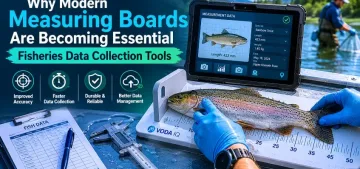
The Veloce Measuring Board from Voda IQ helps eliminate many of these steps by instantly recording fish lengths directly into VodaTrak Software.
This allows fisheries crews to:
• Measure fish faster
• Reduce handling time
• Improve data accuracy
• Eliminate manual transcription
• Increase daily sample capacity
Reducing fish handling time also helps minimize fish stress and improve recovery.
VodaTrak Software Simplifies Fisheries Data Collection
Modern fisheries crews are collecting more data than ever before.
Field operations may need to capture:
• PIT tag IDs
• Fish lengths
• Species identification
• Weight data
• GPS locations
• Date and time stamps
• Environmental conditions
Managing this information manually can quickly become overwhelming.
VodaTrak Software helps fisheries professionals organize and record data efficiently in real time.
Features may include:
• Customizable data fields
• Instant data recording
• Direct Excel export
• RFID reader integration
• Scale integration
• Barcode scanner support
• Organized project management
By reducing paperwork and manual data entry, crews can focus more on sampling and less on administrative tasks.
2D Barcode Scanners Are Improving Multi Species Sampling
One of the newer technologies improving fisheries workflows is the use of 2D barcode scanners for rapid species identification.
In projects involving multiple fish species, technicians often spend valuable time manually selecting species codes or writing species names repeatedly during sampling.
2D barcode systems allow fisheries crews to quickly scan preassigned species codes and instantly populate the correct species information into the digital record.
This can significantly improve efficiency during:
• Screw trap operations
• Gill net surveys
• Mixed species sampling
• Hatchery monitoring
• Population assessments
For example, fisheries crews may use laminated barcode cards representing different species. Instead of manually typing species information, the technician simply scans the appropriate barcode.
Benefits include:
• Faster data entry
• Reduced typing errors
• Improved consistency
• Simplified workflows
• Better organization during high volume sampling
At Voda IQ, fisheries crews have already begun integrating 2D barcode scanners into VodaTrak Software workflows to improve field efficiency during complex sampling operations.
Technology Helps Reduce Fish Handling Stress
One of the biggest advantages of integrated fisheries technology is reduced handling time.
When data collection becomes faster and more organized, fish spend less time being processed.
This may improve:
• Fish recovery
• Survival
• Tag retention
• Overall study quality
Efficient workflows are not just about labor savings. They also support better fisheries science and fish welfare.
One Person Crews Are Becoming More Practical
With integrated technology, many fisheries operations can now be managed effectively by a single technician in situations where multiple crew members were previously required.
Technology helps reduce the need for:
• Manual paperwork
• Verbal communication between staff
• Separate data entry personnel
• Repetitive measurements
• Duplicate workflows
This creates significant advantages for:
• Small fisheries programs
• Remote field operations
• Seasonal crews
• Budget constrained projects
• High volume sampling efforts
The Future of Fisheries Sampling
Fisheries science continues moving toward more connected and efficient workflows.
Future trends will likely include:
• Increased automation
• Better integration between devices
• Faster data collection
• Improved fisheries data management software
• More portable field systems
• Greater workflow standardization
As sampling demands continue increasing, technology will play an even larger role in helping fisheries professionals collect accurate data efficiently.
Why Fisheries Crews Are Modernizing Their Workflows
Modern fisheries technology allows organizations to:
• Save time
• Reduce labor costs
• Improve data accuracy
• Increase sample throughput
• Reduce fish handling stress
• Organize data more efficiently
For many fisheries programs, the move toward integrated digital systems is no longer optional. It is becoming essential for maintaining efficiency and high quality research standards.
Learn More About Modern Fisheries Data Collection
To learn more about VodaTrak Software, the Veloce Measuring Board, RFID readers, PIT tags, and integrated fisheries data collection systems, visit:
Or contact the Voda IQ team to discuss the best fisheries data collection setup for your hatchery, research program, or field sampling operation.

Add comment