
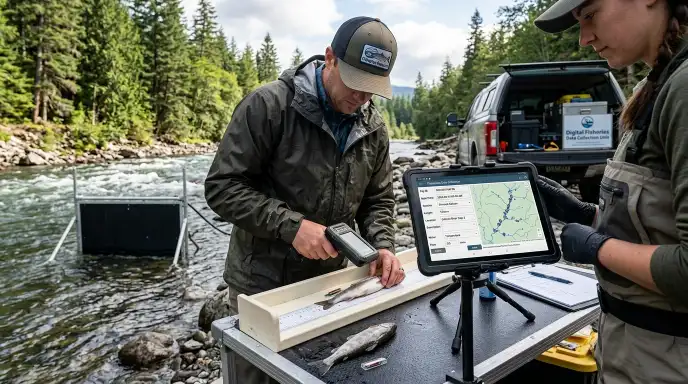
Still Using Clipboards? Why Digital Fisheries Data Collection Saves Time and Money
For decades, fisheries biologists, hatchery crews, and field researchers relied on clipboards, paper forms, and handwritten notes to collect fisheries data. While those methods helped build the foundation of fisheries science, modern fisheries operations are increasingly moving toward digital data collection systems that improve speed, accuracy, organization, and long-term efficiency.
Today, fisheries professionals are under growing pressure to collect more data, process larger sample sizes, improve reporting accuracy, and reduce labor costs. Digital fisheries data collection tools help organizations meet those demands while streamlining operations in the field and hatchery.
At Voda IQ, we work with fisheries professionals worldwide who are modernizing their workflows using RFID technology, integrated measuring boards, barcode scanners, and VodaTrak fisheries data management software.
The Problem with Paper Data Collection
Traditional clipboard-based data collection methods may seem simple, but they often create significant challenges during fisheries projects.
Common problems include:
• Handwriting errors
• Lost field sheets
• Duplicate records
• Incorrect PIT tag IDs
• Missed measurements
• Slow data entry
• Manual transcription mistakes
• Delayed reporting
These problems become even larger during:
• High volume hatchery operations
• Juvenile fish tagging projects
• Multi crew field studies
• Long term monitoring programs
Manual data entry after fieldwork can consume hours or even days of staff time.
Manual Data Entry Costs More Than Most Realize
Many fisheries programs underestimate how much time and money is lost through manual paperwork processes.
When field crews collect data on paper, someone still needs to:
• Reenter the data into spreadsheets
• Verify records
• Correct transcription errors
• Organize files
• Standardize formatting
• Prepare reports
This extra processing time increases labor costs and creates additional opportunities for mistakes.
In some cases, a single incorrect PIT tag digit can compromise valuable research data.
Digital Fisheries Data Collection Improves Accuracy
Modern fisheries data collection systems dramatically reduce human error by capturing information electronically in real time.
Digital systems can automatically record:
• PIT tag IDs
• Fish lengths
• Weights
• Species information
• GPS locations
• Date and time stamps
• Environmental data
By eliminating repetitive manual entry, fisheries crews can improve both speed and consistency.
Faster Fish Processing Improves Fish Health
Efficiency in the field is not just about saving time. It also directly impacts fish’s health.
The longer fish are handled during sampling or tagging operations, the greater the potential stress.
Digital fisheries systems help reduce handling time by allowing crews to:
• Instantly capture data
• Automate measurements
• Eliminate repetitive writing
• Reduce workflow interruptions
This can improve:
• Fish recovery
• Tagging efficiency
• Crew productivity
• Overall study quality
How VodaTrak Software Helps Modern Fisheries Crews
Modern fisheries operations increasingly combine multiple technologies into one streamlined workflow.
At Voda IQ, VodaTrak Software was developed specifically to help fisheries professionals simplify field data collection and improve operational efficiency.
VodaTrak Software allows users to:
• Instantly capture PIT tag codes
• Record fish lengths automatically with the Veloce Measuring Board
• Integrate barcode scanners and digital scales
• Customize data fields for specific projects
• Export data directly into Excel
• Organize records quickly and efficiently
• Reduce transcription and reporting errors
For fisheries crews working in hatcheries, streams, rivers, or remote field locations, VodaTrak Software helps eliminate much of the paperwork and manual data entry traditionally associated with fisheries sampling.
Integrated Fisheries Technology Is Changing Field Work
Today’s digital fisheries setups may include:
• PIT tag readers
• RFID systems
• Measuring boards
• Barcode scanners
• Digital scales
• Tablets or mobile devices
• Fisheries data management software
Tools such as VodaTrak Software and the Veloce Measuring Board help fisheries professionals collect and organize data quickly and efficiently.
For example, fish length measurements can be captured instantly while PIT tag data is automatically recorded into the same digital record.
This eliminates the need for separate handwritten logs and manual spreadsheet entry later.
Real Time Data Organization Matters
One of the biggest advantages of digital fisheries data collection is organization.
Instead of managing stacks of paperwork, researchers can:
• Sort data instantly
• Search records quickly
• Export directly into Excel
• Organize projects efficiently
• Standardize data collection protocols
• Share information across teams
This becomes especially important during:
• Long term monitoring projects
• Hatchery evaluations
• Multi location studies
• Large collaborative research programs
Digital Systems Improve Team Consistency
When multiple field crews collect data manually, inconsistencies often occur between technicians.
Digital systems help standardize workflows by using:
• Predefined data fields
• Dropdown menus
• Automated formatting
• Required entries
• Consistent templates
This improves overall study quality and makes long-term datasets more reliable.
Fisheries Research Is Producing More Data Than Ever
Modern fisheries programs are collecting larger datasets than ever before.
Researchers now monitor:
• Fish movement
• Growth rates
• Survival
• Habitat use
• Passage timing
• Environmental conditions
• Population trends
Managing these large datasets manually becomes increasingly difficult and time-consuming.
Digital data collection systems help fisheries professionals process and organize information more efficiently while improving long term data reliability.
Digital Fisheries Systems Help Reduce Long Term Costs
Although some organizations initially hesitate to invest in digital fisheries technology, the long-term savings can be substantial.
Benefits often include:
• Reduced labor costs
• Faster data processing
• Fewer data errors
• Improved operational efficiency
• Better reporting capabilities
• Reduced paperwork storage
For many hatcheries and fisheries programs, time savings alone can justify the investment.
The Future of Fisheries Data Collection
As fisheries science continues evolving, digital tools are becoming standard across many research and hatchery operations.
Future fisheries workflows will likely continue emphasizing:
• Faster data collection
• Automated measurements
• Integrated RFID systems
• Improved field mobility
• Better fisheries data management software
• Reduced fish handling stress
Organizations that modernize their workflows now will likely gain significant advantages in efficiency, accuracy, and long-term data quality.
Why More Fisheries Professionals Are Going Digital
Digital fisheries data collection is no longer just a convenience. It is becoming an essential part of modern fisheries science.
By replacing clipboards and handwritten logs with integrated digital systems, fisheries professionals can:
• Improve data accuracy
• Save time
• Reduce costs
• Increase efficiency
• Improve fish handling workflows
• Strengthen long term research quality
For hatcheries, universities, conservation agencies, and fisheries researchers, digital technology is helping transform how fisheries science is conducted.
Learn More About Digital Fisheries Solutions
To learn more about VodaTrak Software, RFID readers, PIT tags, integrated measuring boards, and digital fisheries workflows, visit:
Or contact the Voda IQ team to discuss the best digital fisheries data collection setup for your hatchery, aquaculture facility, or research project.


Add comment