
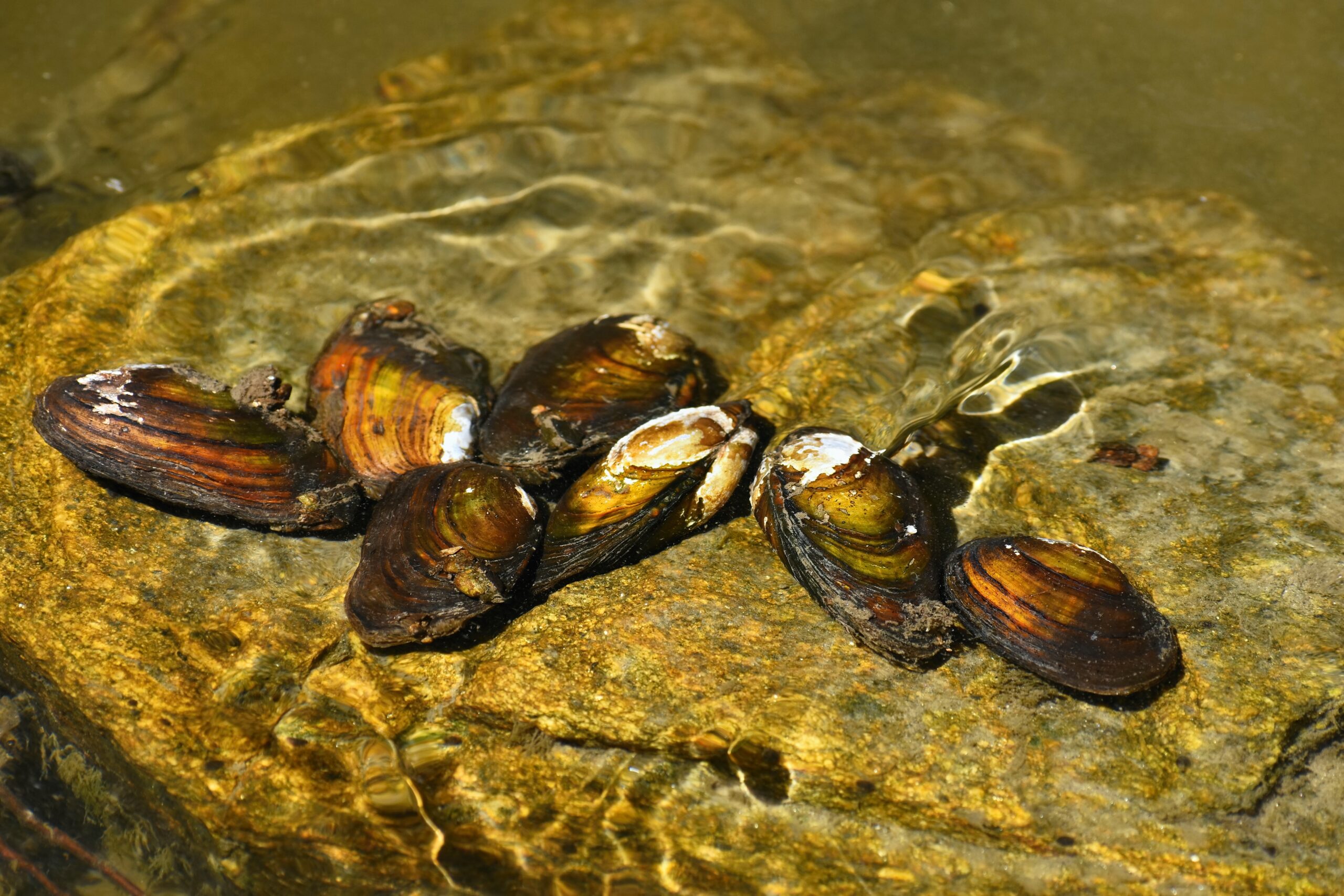
Independent Study Confirms PIT Tag Performance on Oysters in Real Aquaculture Conditions
Research by Shellfish Expert Chantal Gionet
Proven RFID Tagging for Oyster Aquaculture
PIT tags for oysters are gaining traction as a powerful tool for aquaculture tracking, research, and shellfish management. But one key question remains:
Can PIT tags withstand real-world oyster farming conditions over multiple seasons?
An independent study conducted by shellfish expert Chantal Gionet, MSc provides strong, real-world validation and valuable insight for aquaculture professionals evaluating RFID tagging solutions.

About the Researcher: Chantal Gionet

Chantal Gionet is a highly experienced biology consultant and shellfish expert based in Caraquet, New Brunswick, Canada. With decades of experience in oyster hatcheries, shellfish production, and applied aquaculture research, she has worked extensively across Canada, the United States, and Australia.
Her work focuses on:
- Shellfish hatchery development and optimization
- Oyster grow-out systems
- Experimental design and applied research
- Long-term performance validation in real environments
This level of expertise makes her uniquely qualified to evaluate PIT tag performance under demanding aquaculture conditions.

Study Objective: Do PIT Tags Work on Oysters?
The goal of this study was to determine whether PIT tags applied to oysters remain functional, intact, and securely attached during standard aquaculture practices.
The research evaluated:
- PIT tag durability in marine environments
- Adhesive performance and long-term retention
- Performance across different oyster growth stages
- The impact of different aquaculture systems
Experimental Design
This was a multi-year, real-world study designed to reflect actual oyster farming conditions.
Adhesive Comparison
- A polyurethane-based adhesive (referred to as “premium glue”) selected by the independent researcher
- A cyanoacrylate adhesive (Loctite-type)
Oyster Groups
- Smaller, early-stage oysters
- Later-stage oysters approaching market size
Aquaculture Systems Tested
- Traditional floating cage system
- Significant movement from waves and wind
- Routine flipping to control biofouling
- High physical stress and shell-to-shell contact
- More stable grow-out system
- Reduced movement and mechanical stress
- No flipping required
- Lower abrasion environment

Real-World Marine Conditions
Unlike controlled lab studies, this research took place in full production environments.
Oysters and tags were exposed to:
- Continuous wave action and environmental movement
- Handling stress from cage flipping
- Shell abrasion and physical impact
- Seasonal extremes including freezing temperatures and ice cover
- Long-term ocean deployment over multiple years
Each PIT tag was mounted to the shell and fully encapsulated in adhesive to protect against impact and friction.

Key Results: PIT Tag Performance on Oysters
1. Zero Tag Loss with Polyurethane-Based Adhesive
- No PIT tags were lost when using the polyurethane-based “premium” adhesive selected by the researcher
- Performance was consistent across both aquaculture systems
- Strong retention across all oyster growth stages
2. Proven at Market Size
- Oysters reached full commercial size and weight
- Tags remained secure and functional even at maximum growth
3. Minimal Failures with Cyanoacrylate Adhesive
- Some tag loss occurred under cyanoacrylate adhesive conditions
- Only one tag failure was recorded over two full production seasons

Why This Matters for Oyster Aquaculture
Oyster farming presents one of the most challenging environments for tagging technology:
- Constant movement and abrasion
- Biofouling and handling stress
- Long-term exposure to saltwater
- Extreme seasonal conditions
This study confirms that PIT tags can:
- Withstand multi-year marine deployment
- Maintain performance through handling and growth cycles
- Provide reliable data collection in real-world aquaculture systems
These findings are especially important for:
- Oyster aquaculture tracking and management
- Shellfish research projects (e.g., genetic programs to differentiate families or groups, disease-resistant animals, location-specific animals, etc.)
- Growth and survival studies
- Traceability and production monitoring

A Note on Adhesives and Application
Adhesives used in aquaculture tagging are often categorized by type rather than specific product.
In this study:
- A polyurethane-based adhesive demonstrated superior long-term retention
- A cyanoacrylate-based adhesive showed some limitations under high-stress conditions
Application method was also critical, with full encapsulation of the tag playing a key role in durability.

Ongoing Research and Next Steps
The study is ongoing, with oysters continuing through additional production cycles.
Future evaluation may include:
- Effects of washing and grading equipment
- Additional winter exposure cycles
- Continued long-term durability validation

Conclusion: Reliable PIT Tagging for Oysters
This independent research demonstrates that PIT tags are a proven, durable solution for oyster aquaculture when properly applied.
With validation from an experienced shellfish expert, aquaculture professionals can move forward with confidence in adopting RFID tagging technology for oysters.

Interested in Applying This Technology?
If you are considering PIT tags for oyster aquaculture, research, or hatchery operations, we encourage you to reach out.
We’re happy to:
- Discuss the study and results in more detail
- Share best practices for tagging and application
- Help you implement a solution tailored to your project
Chantal Gionet has also indicated she is open to directing technical inquiries toward Voda IQ to ensure consistency with the tags used in this study.
Contacts: Traci Beckley [email protected] or Chantal Gionet [email protected]



Add comment